


Protecting a family home and protecting a warehouse full of inventory require fundamentally different approaches, even though both fall under the broad umbrella of security services. Understanding the differences helps you choose the right coverage for your specific situation.
Different Risk Profiles Entirely
Residential security is primarily focused on protecting people and personal property from break-ins, while commercial security often needs to address a wider range of risks, including inventory theft, employee safety, liability exposure, and after-hours vulnerability across potentially larger and more complex properties.
Guard Presence and Scheduling Differences
Residential security often involves either alarm monitoring with rapid response, or occasional patrol for larger properties, since most homes don’t require a constant guard presence. Commercial properties, particularly retail, warehouses, or construction sites, more frequently require a consistent or scheduled guard presence due to higher-value assets and more complex access patterns.
Access Control Complexity
A home typically has a handful of entry points and a small, known group of people needing access. A commercial property often has multiple entry points, a larger and more variable group of people needing access, including employees, contractors, and visitors, and a much higher stake in making sure access is properly tracked and controlled.
Technology Integration Differences
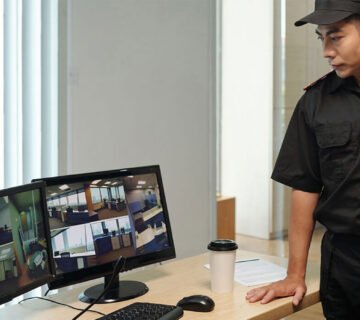
Residential security technology tends to focus on simplicity: doorbell cameras, alarm systems, and straightforward monitoring. Commercial security often integrates more complex systems, including multi-camera CCTV networks, access control logging, and sometimes dedicated security personnel actively monitoring live feeds.
Liability and Insurance Considerations
Commercial properties generally carry significantly higher liability exposure, both from a safety standpoint for employees and customers, and from an asset protection standpoint given the value of inventory or equipment involved. This typically means commercial security decisions are more closely tied to insurance requirements than residential security choices.
Choosing the Right Approach for Your Situation
Whether residential or commercial, the right security approach starts with an honest risk assessment specific to the property, rather than applying a generic solution. A family home in a quiet neighborhood has very different needs than a retail store in a high-traffic commercial district, even though both technically fall under “security.”
FAQs
Does a typical home need a security guard, or is alarm monitoring enough?
For most homes, alarm monitoring with rapid response is sufficient, with guard patrol reserved for larger properties or specific security concerns.
Why do commercial properties often need more complex security than homes?
Commercial properties typically have higher-value assets, more people needing access, and greater liability exposure, all of which require more comprehensive coverage.
Can the same security company handle both residential and commercial needs?
Many companies do offer both, but it’s worth confirming they have specific experience and appropriately trained staff for whichever service you need.
Is commercial security significantly more expensive than residential?
Generally yes, given the broader scope of coverage, but costs vary significantly based on property size, risk level, and specific services required.
How do I know which type of security assessment my property needs?
A professional security consultation can assess your specific property, whether residential or commercial, and recommend an approach based on actual risk rather than a generic package.
Get Security Coverage Built for Your Property
Blink Security Ltd offers tailored residential and commercial security solutions based on your property’s specific risk profile. Contact us today for a free consultation.





No comment