


Who actually has a key to your building right now? If you can’t answer that confidently, your business likely has an access control gap that’s easier to fix than most owners realize.
What Access Control Actually Means
Access control refers to any system that manages and restricts who can enter a property or specific areas within it. This ranges from something as simple as a traditional lock and key to more advanced systems like keycards, biometric scanners, or app-based digital access.
Why Traditional Keys Create Long-Term Risk
Physical keys are difficult to track once distributed. Former employees, contractors, or vendors often retain keys long after they should, and duplicating a physical key is simple and often goes unnoticed. Over time, this creates a growing list of people with unmonitored access that most business owners underestimate.
Keycard and Fob Systems
Keycard or fob-based systems allow businesses to grant and revoke access instantly, without needing to physically collect a key or rekey a lock. They also typically log entry activity, giving businesses a clear record of who entered a space and when, which is valuable both for security and for resolving any disputes about access.
Biometric Access Control
Biometric systems, using fingerprint or facial recognition, offer the highest level of certainty about who is actually entering a space, since unlike a card or key, biometric credentials can’t be lent, lost, or duplicated. These systems are increasingly common for businesses with particularly sensitive areas, like server rooms or high-value storage.
Choosing the Right System for Your Business
Not every business needs biometric access control. A small office with a handful of employees might be well served by a simple keycard system, while a larger facility with multiple sensitive zones may benefit from a tiered approach combining keycards for general areas and biometric access for restricted zones.
Integrating Access Control With Broader Security
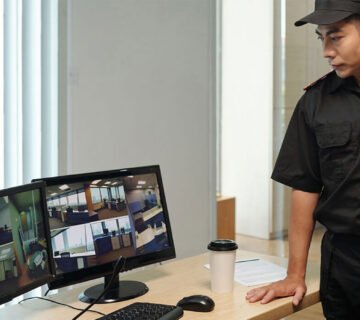
Access control works best as part of a broader security strategy, combined with CCTV coverage and, where appropriate, guard presence. Access logs become significantly more valuable when paired with camera footage, giving a complete picture of activity rather than just a record of card swipes.
FAQs
Is a keycard system significantly more secure than traditional keys?
Yes, primarily because access can be instantly revoked and activity is logged, both of which are difficult or impossible with traditional keys.
How much does a basic access control system typically cost?
Costs vary significantly based on system type and number of access points, so it’s worth getting a specific quote based on your property’s layout.
Do small businesses really need access control systems?
Even small businesses benefit from moving away from easily duplicated physical keys, particularly if there’s any staff turnover or contractor access involved.
Is biometric access control necessary for most businesses?
Not always. It’s most valuable for businesses with particularly sensitive areas, while general access can often be managed effectively with keycard systems.
Can access control systems integrate with existing security cameras?
Yes, many modern systems are designed to integrate with CCTV, giving a combined record of both entry activity and visual footage.
Upgrade Your Business’s Access Control
Blink Security Ltd helps businesses design and implement access control systems suited to their specific risk profile. Contact us today for a consultation.





No comment